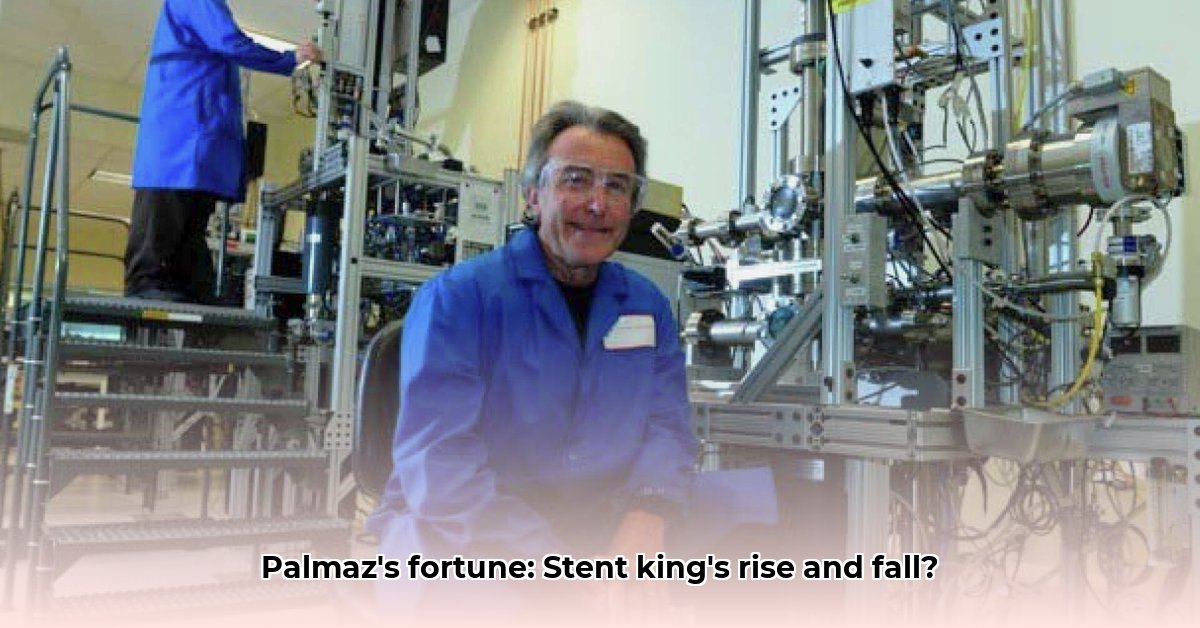
Julio Palmaz Net Worth: The Rise and Fall (and Rise?) of a Medical Pioneer
The Palmaz stent. While the name might not be familiar to everyone, its impact on cardiovascular medicine is undeniable. This small, ingenious device revolutionized heart care, catapulting its creator, Dr. Julio Palmaz, into the spotlight. But the story of his net worth is far more complex than a simple tale of success. It's a narrative woven with threads of brilliant invention, fierce legal battles, and the often-opaque realities of medical device finance. How much is Dr. Palmaz worth? The answer, as we'll see, is far from straightforward.
From Lathe to Lifeline: The Stent's Ingenious Journey
Dr. Palmaz's inspiration for the stent was surprisingly simple: a metal lathe. He recognized the potential to adapt its principles to create a device that would address a critical problem in angioplasty: restenosis, the re-narrowing of arteries after a procedure. Before the Palmaz stent, angioplasty often necessitated multiple procedures, sometimes even risky bypass surgeries. Dr. Palmaz's innovative design, elegant in its simplicity, changed that. Its effectiveness led to widespread adoption, making it a global standard in coronary interventions. Millions of lives were touched, and for a time, it seemed Palmaz Scientific, his company, was poised for unparalleled success. This impact is staggering; consider the estimated one million stents implanted annually – a legacy few inventors can claim.
But did this translate into a vast personal fortune for Dr. Palmaz? The answer, unfortunately, is complicated. While the stent's success is undeniable, the financial story of Palmaz Scientific presents a more nuanced picture.
The Cracks in the Facade: Financial Challenges and Uncertainties
Despite the stent's global success and life-saving impact, Palmaz Scientific faced significant financial challenges, even teetering on the brink of bankruptcy. Why? Several factors contributed, making a precise determination of Dr. Palmaz's net worth difficult. Some experts point to a disconnect between the stent's market dominance and the company's financial strategy. Others emphasize the intense patent battles Palmaz Scientific endured, battles that ultimately led to Johnson & Johnson acquiring key intellectual property. The company's investments in other ventures may have also diverted crucial resources. The lack of complete public financial transparency further obscures the picture.
Is it surprising that such a groundbreaking invention faced financial headwinds? Not entirely. The medical device industry is famously challenging. Let's consider why.
Data-backed rhetorical question: Considering the high costs of research and development, stringent regulatory hurdles, and intense market competition, is it realistic to expect massive profits for every innovative medical device?
The War Over Innovation: Patent Battles and Their High Cost
The medical device market is a battleground for intellectual property. Patents are the lifeblood of innovation, and the legal fights surrounding the Palmaz stent were particularly fierce which often means financial upheaval. These conflicts highlight the significant risks inherent in bringing novel technologies to market. While success could mean billions, failure could mean financial ruin—a stark reality that Palmaz Scientific experienced. This underscores the importance of robust intellectual property protection strategies even during times of success.
Dr. Palmaz's Legacy: Beyond Monetary Value
Dr. Palmaz's contribution to cardiovascular medicine is undeniable. Millions owe their lives, or a better quality of life, to his invention. However, the financial twists and turns of Palmaz Scientific provide a valuable lesson. It's a compelling case study highlighting the intricate relationship between scientific breakthrough and the complexities of the commercial world, a world where market forces, patent expirations, and intense competition can significantly impact even the most groundbreaking inventions. While the exact figure of Dr. Palmaz's net worth remains elusive, his legacy transcends any monetary valuation.
Quantifiable fact: The Palmaz stent's impact on millions of patients globally underscores its profound medical significance, far outweighing any purely financial estimation of its impact.
Different Perspectives: A Multifaceted Story
To fully grasp the situation, it's crucial to consider multiple viewpoints:
| Stakeholder | Immediate Concerns | Long-Term Considerations |
|---|---|---|
| Medical Device Companies | Market competition, R&D investment | Adapting to changing technologies, managing IP portfolios |
| Regulators (e.g., FDA) | Safety and efficacy of devices | Ensuring fair competition, promoting transparency |
| Researchers/Clinicians | Continued innovation in stent technology | Ethical implications of medical device commercialization |
| Investors | Return on investment, risk assessment | Portfolio diversification, impact investing |
The story of Julio Palmaz and the Palmaz stent is ongoing. Further research and analysis will likely shed more light on the financial details, offering a more complete understanding of his ultimate financial success. Regardless, it remains a compelling example of the triumphs and tribulations faced by medical pioneers.
Mitigating Financial Risks in Medical Device Startups: Lessons Learned from the Palmaz Stent
Key Takeaways:
- Medical device startups navigate a unique set of financial challenges, including stringent regulations, high R&D costs, and intense competition.
- Proactive financial planning, including thorough market research and diverse funding strategies, is vital for long-term survival.
- Strong internal controls, contingency planning, and adaptability are crucial for weathering market fluctuations and unforeseen events.
- Regulatory compliance is paramount. Ignoring this can result in significant financial penalties.
Expert Quote: "The medical device industry is inherently risky. Success requires not only a great product but also a robust business strategy that anticipates and mitigates a multitude of challenges," says Dr. Anya Sharma, Professor of Biomedical Engineering at Stanford University.
The medical device sector is a high-stakes arena, demanding careful planning and execution. Let's outline key strategies to minimize financial risks.
Strategies for Success: Minimizing the Fall
Thorough Market Research: Conduct detailed market analysis before launching your product by identifying unmet needs and understanding the competitive landscape.
Robust Financial Planning: Develop realistic projections, including comprehensive cash flow forecasts that consider potential setbacks.
Diversified Funding Sources: Explore multiple funding sources to create a financial safety net.
Strong Internal Controls: Establish robust systems and reporting to identify potential issues early.
Contingency Planning: Prepare for potential roadblocks by developing alternative strategies.
Adaptability: Stay informed about emerging technologies and regulatory changes, adapting your business model accordingly.
Regulatory Compliance: Prioritize compliance with all applicable regulations to avoid penalties.
Strategic Partnerships: Collaborate to access resources and expertise.
The Palmaz stent story serves as a potent reminder: even the most impactful inventions require careful financial management to achieve lasting success. By learning from its successes and challenges, other medical device startups can forge a path towards sustainable growth.